Healing Bat
Horizon Europe EU project is meant to develop advanced sensing, monitoring and self-healing mechanisms to self-repair batteries, leading to the EU batteries of the future.

Horizon Europe EU project is meant to develop advanced sensing, monitoring and self-healing mechanisms to self-repair batteries, leading to the EU batteries of the future.

HEALING BAT is an EU project that brings together 10 European research centres, leading universities and innovative companies from 6 different countries to investigate the EU batteries of the future, which will be smart and more sustainable.
Within 4 years, the Horizon Europe project will develop and implement self-healing materials and healing strategies in key battery components, used in the conventional lithium-sulfur (Li-S) battery, and extrapolate the designs and concepts to develop a new class of self-restoring Li-S batteries.
HEALING BAT will also create a toolbox consisting of self-healing materials, battery sensors and bespoke battery management systems (BMS), with the aim of maximising the performance of the developed Li-S battery in terms of quality, reliability and lifetime, as well as avoiding or timely healing occurring damages that could lead to battery degradation.
For this purpose, the EU project has been granted more than €5.7 million from the European Commission and the respective UK and Swiss funding agencies, under the umbrella of the Horizon Europe programme for research and innovation. HEALING BAT also takes part in BATTERY2030+, a large-scale European research initiative that brings together several Horizon Europe EU projects to invent the sustainable batteries of the future, that will demand fewer resources and improve the competitiveness of EU battery cell industries.
Project Management
WP1 aims to allow the management of the whole EU project under development, by providing the necessary resources for each work package and verifying that each milestone has been reached at appropriate times and with acceptable results. Furthermore, it involves the management of foreseen and unforeseen changes to the project itself or its schedule, as well as the relations between the HEALING BAT and external bodies, in the European research and Horizon Europe ecosystem.

Component-level self-healing, battery chemistry & form factor
WP2 focuses on the study of the battery degradation mechanisms and the development of self-healing strategies for the battery cell and battery components, namely cathodes, anodes, separators, and electrolytes, both solid and liquid. It involves the development of healing strategies that will be undertaken through Solid Electrolyte Interface (SEI), polymers for polymer electrolyte membranes and separators, and surface layer treatments of anode and cathode. The different healing components will be tested and integrated with the sensors developed in WP3 and with the battery prototypes developed in WP4.

Sensor development and integration at battery component level
WP3 aims to develop sensor instrumentation, communication electronics and monitoring technology to create smart batteries that will be self-healing. The sensors will be embedded directly into the battery cell during manufacture. Moreover, a two-way smart communication technology will be developed and deployed using hybrid Radio-frequency powerline communication. This will allow the Battery Management System (BMS) to monitor and predict sulfur oxide (SOx) activity and deploy self-healing strategies.

Battery Prototyping, testing & advanced analytics
WP4 is dedicated to battery prototyping, testing and advanced analytics. It aims at the determination of the cycling stability and lifetime of the battery cell, with self-healing functionality and an understanding of self-healing mechanisms. It also seeks to establish the electrochemical markers needed for self-healing, the triggers that can be used to initiate self-healing and the ways it can be triggered by the Battery Management System (BMS). Its final purpose is to determine the safety improvements with self-healing implementation and sensor-activated self-healing, preventing battery degradation.

BMS, Modeling & digitalisation
WP5 has two main objectives. Firstly, it aims to develop a Battery Management System (BMS) for battery protection, monitoring of the battery cell and activation of its healing trigger, preventing battery degradation. Secondly, it seeks to develop a Digital Twin platform, a cloud system to store all the data collected by the BMS and the complete characterization of the Li-S battery, allowing the computation of its essential parameters.
All this will result in the complete characterization and monitoring of smart, self-healing Li-S batteries, acquiring the actual health (SoH) and state of charge (SoC), thanks to the battery cells and sensors developed in earlier work packages.

Life Cycle Analysis
WP6 will create an understanding of the benefits of the developed battery technology in terms of life cycle and economics. It will identify and assess value chain concepts for user cases and perform an environmental life cycle assessment of battery production value chains, to identify key issues to reaching circularity and climate neutrality. Key variables will be identified alongside the dynamics affecting the developed solutions and their impact on technology, cost and environment through techno-economic analysis, to reach the sustainable EU batteries of the future.

Exploitation & dissemination
WP7 involves all actions that contribute to increasing the impact of the HEALING BAT project, transcending its own consortium and timeframe. This includes the dissemination of its results in scientific and professional publications and events; the communication of its scope, activities, and results to a broader audience, with a focus on its stakeholders; and the exploitation of its results after its ending.
It is also responsible for developing policy briefs, coordinating data management in the consortium, and ensuring compliance with GDPR and intellectual property rights (IPR). Moreover, it represents HEALING BAT in BATTERY2030+, a large-scale European research initiative that brings together different Horizon Europe projects to invent the sustainable EU batteries of the future.

Coventry University
Coventry University is a global, modern university with a mission of Creating Better Futures. It has greatly increased its research capacity and capability with a focus on impactful research, delivered for and with partners to address real-world challenges and support businesses and communities to grow.
The depth and breadth of its rapidly growing research portfolio has been validated by the UK research assessments. Its commitment is to delivering transformational change for its students, partners and communities around the world as it continues to evolve.
FI Group
FI Group advises companies on the management of their R&D&I financing, through the design and implementation of actions aimed at boosting their technological and economic development. These actions focus on the integral treatment of R&D&I tax incentives and the management of calls for public grants and subsidies at the national and European levels, resulting in an improvement of the companies’ profit and loss accounts.
Its commitment to achieving excellence in all its services has led FI Group to assume the leadership of the sector, both at the national and European levels, thus promoting an ambitious internationalisation plan with a clear objective: to help its clients in the generation of value.

SupraPolix
SupraPolix BV is a young materials company from Eindhoven that has developed a broad portfolio of proprietary self-healing polymeric materials based on specific hydrogen-bonding systems. These flexible materials are used in a variety of applications where self-healing and reversible interactions are delivering new and unique properties.
PSI
The Paul Scherrer Institute (PSI) is the largest research institute for natural and engineering sciences in Switzerland, conducting cutting-edge research in four main fields: future technologies, energy and climate, health innovation and fundamentals of nature. PSI develops, builds and operates complex large research facilitie, such as the Swiss Light Source (SLS), the free-electron X-ray laser SwissFEL, the SINQ neutron source, the SμS muon source and the Swiss research infrastructure for particle physics CHRISP, and is part of the ETH Domain.
HZB
The Helmholtz-Zentrum Berlin (HZB) is one of the largest non-university research centres in Berlin. It is working on highly efficient solar cells of the next generations, such as thin-film technologies and new classes of materials such as perovskites. In doing so, it seeks contact with the industry at an early stage. It is developing novel catalysts and materials that convert sunlight into chemical energy and thus produce renewable fuels, such as hydrogen. Battery materials with better properties are also being explored at HZB. Another important field of research is quantum materials for tomorrow’s energy-efficient information technologies.
CPI
CPI (Centre for Process Innovation) catalyses the adoption of advanced technologies and manufacturing solutions to benefit people, places, and our planet. As a trusted partner of industry, academia, government, entrepreneurs, and the investment community, we connect the dots within the innovation ecosystem to make great ideas and inventions a reality.

TU Delft
TU Delft is the oldest and largest technical university in the Netherlands. Its department of Aerospace Structures and Materials contributes to making aviation and spaceflight more sustainable by developing the structures and materials of tomorrow.
It works on the creation of new materials with smaller environmental footprint and finding ways of reusing old materials. It researches how to make structures smarter and lighter, to support the transition to new sources of energy. It develops new manufacturing techniques, which use less energy and enable easier recycling. It devises new experimental, analytical, and numerical analysis techniques, to ensure the structural integrity and safety of future air and spacecraft. Using innovative sensing and monitoring technology, supported by AI, it closes the gap between the physical and digital world, easing manufacturing and gaining new insight into the health of a vehicle’s structures.
IDNEO
Idneo supports its worldwide clients in transforming their businesses by integrating innovative and customized technology solutions. Idneo is a comprehensive technology services company, specialising in the design, development, certification and manufacturing of value-added technology products or services.
Its highly qualified and client-focused team has extensive experience in its target markets, consolidating its position as an engineering and manufacturing partner. Idneo is committed to facing complex challenges and ensuring robustness and quality in every project developed.

IREC
The Catalonia Institute for Energy Research (IREC) is a public research centre ascribed to the Department of Climate Action, Food and Rural Agenda of the Government of Catalonia, in which the Department of Research and Universities, and the Catalan Energy Institute (ICAEN) also participate. IREC is a CERCA centre and is accredited as a TECNIO centre.
Created in 2008, it aims to contribute to the sustainable development of society and to increase the competitiveness of industry in the energy sector. The centre develops research of excellence in the medium and long term, innovation and development of new technological products, and dissemination of relevant knowledge to the public.
TU Dortmund
Since its founding more than 50 years ago, TU Dortmund University has developed a special profile encompassing 17 departments ranging from science and engineering to social sciences and culture studies.
TU Dortmund University has a strong focus on research. The university’s disciplines, e.g. mechanical engineering with its emphasis on production and logistics, physics, biochemical- and chemical engineering, statistics and computer science, as well as education research, are well known for their outstanding research achievements both nationally and internationally.
As part of TU Dortmund, the professorship for sensors focusses its investigations on new technologies suitable for a quantitative detection and analysis of fluids. The ultimate aim of the research efforts is to miniaturize novel sensing approaches using microsystem technology to allow for embedding sensors and enable large-scale deployments.
Great collaboration can still fall short if each team interprets integration differently. ... Read More
To ensure that results from different laboratories are directly comparable, we introduced ... Read More
From single sensors to coordinated arrays HEALING BAT’s WP3 has reached&... Read More
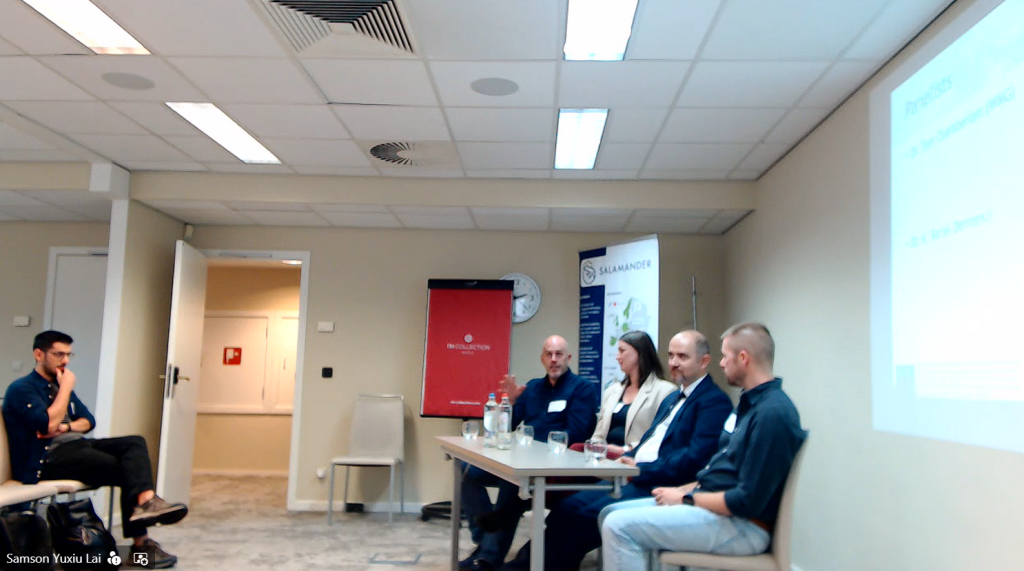
Stefan Palzer, coordinator of the HEALING BAT project from TU Dortmund, represented the pr...
More info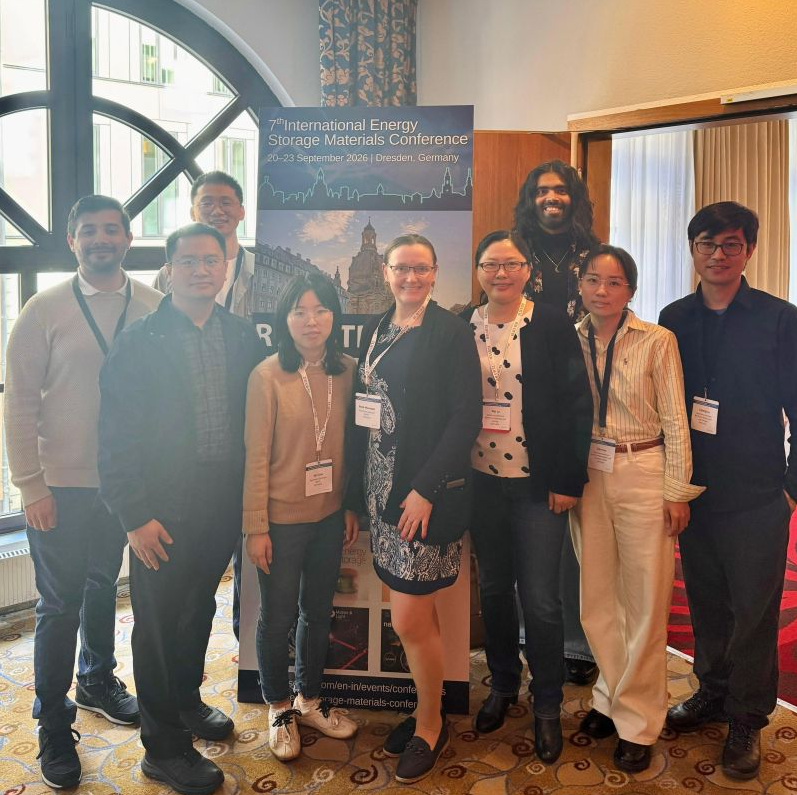
The partner Helmholtz-Zentrum Berlin (HZB) participated in the 7th International Energy St...
More info
Our online library offers a diverse range of free downloadable content, including branding materials, public project deliverables, newsletters, press releases, and scientific publications. Explore and access these valuable resources to stay informed and expand your knowledge horizons.



Funded by the European Union. Views and opinions expressed are however those of the author(s) only and do not necessarily reflect those of the European Union or the European Climate, Infrastructure and Environment Executive Agency (CINEA). Neither the European Union nor the granting authority can be held responsible for them.