
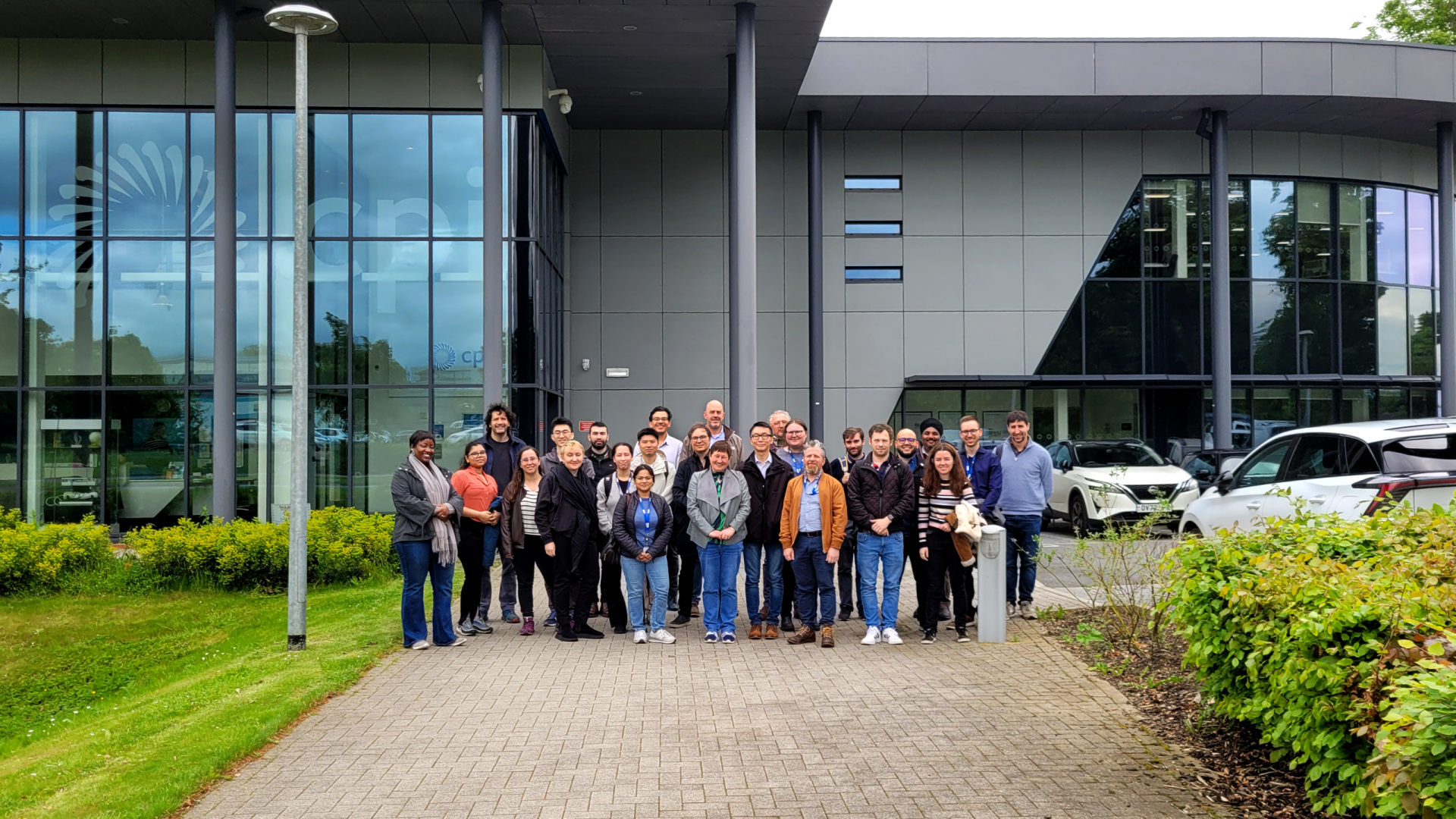
The HEALING BAT consortium gathered on May 23rd and 24th 2024 to celebrate the project’s 2nd General Assembly, one year after its kick-off.
The event was held at the facilities of the project partner CPI in Sedgefield, a market town located in County Durham, UK. All the other partners in the consortium were present, including TU Dortmund, Coventry University, Helmholtz-Zentrum Berlin, TU Delft, Paul Scherrer Institute, Idneo, IREC, FI Group and SupraPolix.
The meetings started with an introduction by the project coordinator, Stefan Palzer from TU Dortmund, who reminded the project objectives and thanked the partners for their commitment. Then, the main updates on project management, as well as on communication and dissemination, were shared by TU Dortmund and FI Group, respectively.
After this, the technical work packages presented their progress and planned actions for the next six months and discussed the opportunities and challenges ahead for the development of a new class of self-healing batteries based on lithium-sulfur (Li-S), covering:
To date, all partners have concentrated their efforts on developing a technology that ensures the compatibility of the numerous approaches necessary to embed sensing and actuating capabilities into a battery cell. Based on a thorough analysis of the thermal, chemical, electrochemical, and mechanical framework conditions, the consortium has developed a roadmap to produce its sensing elements.
Right now, HEALING BAT is heading straight for its first major milestone, which will see its sensing technology embedded into a Li-S-based battery cell for the first time. The consortium hopes to find a viable, long-term, stable way to integrate advanced functionalities directly into the battery cell based on its sensor/actuator technology. In parallel, several self-healing approaches are tested and shall be ready for triggering by the time the sensorised battery cell becomes viable.
The meetings held a specific slot for the presentations of the sister projects SALAMANDER and PHOENIX, which also deal with battery sensors to develop self-healing batteries and are part of the large-scale research initiative Battery 2030+, aimed at making Europe a world leader in the development of the sustainable batteries of the future. Likewise, HEALING BAT was presented at the General Assemblies of SALAMANDER and PHOENIX last April, with the purpose of fostering collaborations among them.
After listening to all the updates that were shared, the External Advisory Board of the project, which has finally been formally constituted, provided some guidance and advice to the consortium for reaching its goals and achieving exploitable results.
To end with, the Steering Board met privately to discuss relevant issues and reach some agreements regarding the management of the project.
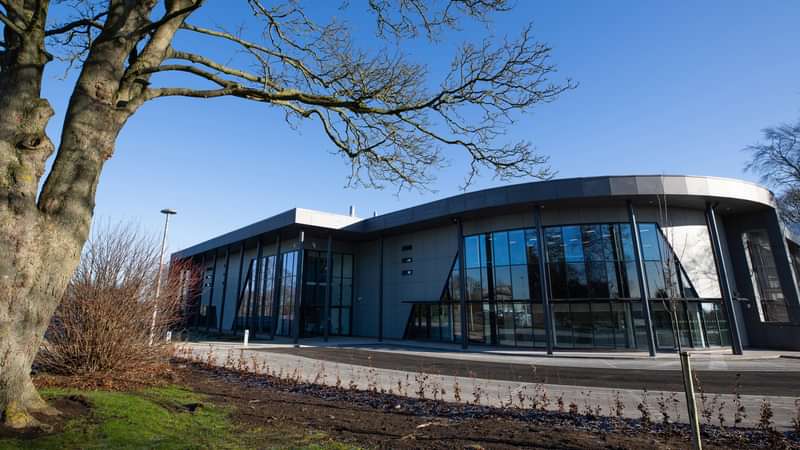
After the meetings, the consortium paid a visit to CPI‘s facilities and laboratories, located in the Neville Hamlin Building and the Coxon Building. The company is an independent technology innovation centre that brings together academia, businesses, government and investors to translate research into the marketplace.
The partners also enjoyed a tour of the Nissan Sunderland Plant, a 362,000-square-metre site that employs over 6,000 workers and has built over 11 million cars since 1986. There, they could learn how cars are assembled in real-time.
Great collaboration can still fall short if each team interprets integration differently. ... Read More
To ensure that results from different laboratories are directly comparable, we introduced ... Read More
From single sensors to coordinated arrays HEALING BAT’s WP3 has reached&... Read More



Funded by the European Union. Views and opinions expressed are however those of the author(s) only and do not necessarily reflect those of the European Union or the European Climate, Infrastructure and Environment Executive Agency (CINEA). Neither the European Union nor the granting authority can be held responsible for them.