

Li-S batteries offer a theoretical capacity around ten times higher than today’s Li-ion batteries, but they degrade quickly: many Li-S cells last only around 100 cycles, compared with thousands of cycles for Li-ion. Self-healing could close this gap by allowing the battery to repair itself and extend its lifetime. How can a battery know when it needs to repair itself? This question lies at the heart of HEALING BAT Deliverable D4.5, which establishes the trigger conditions required to activate self-healing mechanisms in advanced lithium-sulfur batteries. The results represent an important milestone towards batteries capable of autonomously monitoring their health, detecting degradation and initiating recovery actions before performance is significantly affected.
Moving Beyond Traditional Battery Monitoring
Conventional battery management systems primarily monitor performance degradation and safety parameters. However, self-healing batteries require an additional layer of intelligence: the ability to recognise the early signs of damage and determine the optimal moment to initiate a healing response.
To address this challenge, HEALING BAT combined the expertise of several partners working on different self-healing technologies, including self-healing binders, solid polymer electrolytes and electrode protection strategies. By analysing routine sensor data with machine learning to understand how these materials respond to degradation and recover performance, CPI established the workflow for a decision-making framework capable of linking battery health monitoring directly to healing actions.
From Detecting Damage to Triggering Recovery
A key outcome of the work was the definition of practical trigger conditions capable of signalling when healing should be activated. Today, healing is usually started by hand once capacity falls to around 80% in Figure 1, left. Rather than relying on a single capacity threshold, the project investigated how different electrochemical signatures evolve as batteries age. Coulombic efficiency, voltage polarisation, impedance changes, temperature variations and other performance indicators were evaluated as potential warning signals that degradation is reaching a stage where self-healing could be beneficial.
The work also demonstrated that battery healing can successfully restore performance under the right conditions. For example, a pouch cell with a thermally activated self-healing binder developed by IREC recovered almost 90% of its initial capacity after just one hour at 60°C, while self-healing solid polymer electrolytes developed by TU Delft restored ionic transport pathways following mechanical damage. These results reinforce the importance of accurately identifying the right moment for intervention, ensuring that healing actions are applied when they can provide the greatest benefit. Figure 1 contrasts today’s manual approach with the intelligent one being developed in HEALING BAT: cycling data and integrated sensors perceive degradation, machine learning decides the battery’s health state, and self-healing is then triggered automatically.
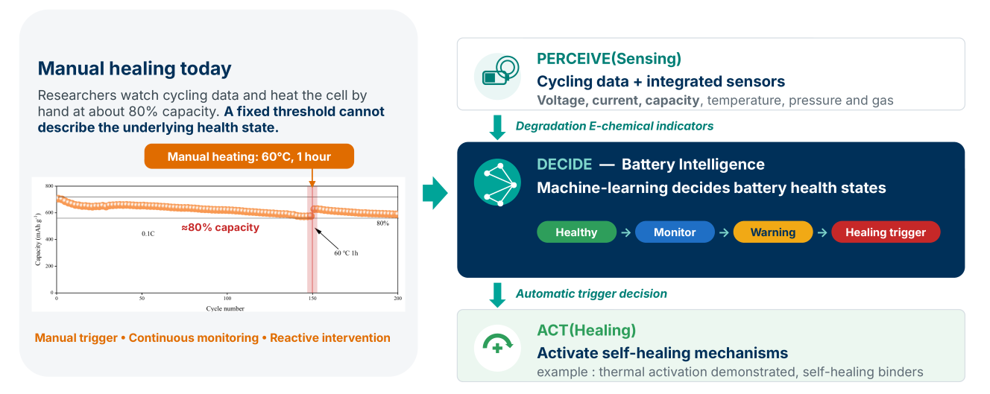
Figure 1. Manual healing today (left; IREC pouch cell, adapted from D4.5) versus the proposed perceive–decide–act approach (right).
Artificial Intelligence for Smarter Battery Decisions
Beyond conventional monitoring approaches, HEALING BAT explored the use of machine learning to identify hidden degradation patterns that may not be visible through traditional threshold-based methods. Using almost 7,000 charge-discharge cycles from a range of lithium-sulfur coin cells tested by project partners, CPI’s digital and battery teams developed an unsupervised learning framework capable of distinguishing five battery health states and detecting transitions from healthy operation towards ageing. Figure 2 shows the result for one cell: using only six features taken from its charge and discharge curves, and without ever being told the cell’s state of health, the model tracked it from healthy operation through a transition phase into late ageing. Across all cells, the model’s states followed the expected ageing order with an average confidence of more than 95% and only a small number of cycles fell below the 60% in which an assignment is treated as uncertain. To avoid false alarms, the recemented trigger only fires once a cell has left healthy states with high confidence over several consecutive cycles.
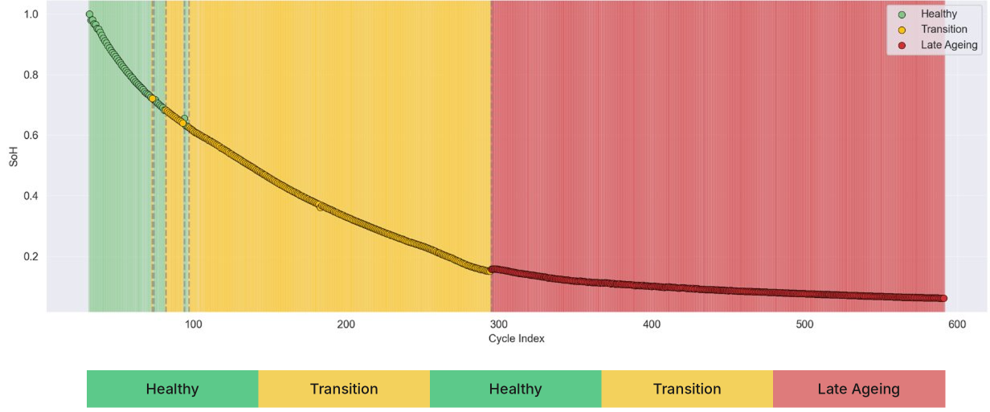
Figure 2. Health states identified by the unsupervised model for one Li-S cell over its lifetime.
This approach allows battery management to move from reactive maintenance strategies to predictive decision-making. Instead of waiting until performance has significantly deteriorated, future battery management systems could identify degradation at an earlier stage and activate self-healing mechanisms before damage becomes critical.
A Step Towards Autonomous Self-Healing Batteries
The trigger framework developed in HEALING BAT provides the missing link between advanced self-healing materials and intelligent battery management systems. By combining sensing, machine learning as the battery’s “brain” working with the battery management system and self-healing technologies as its “actuators”, the project is creating the foundations for batteries capable of continuously assessing their own condition and autonomously deciding when repair is required, making it an example of physical AI where AI senses, interprets and acts in the physical world. The same five steps (sense, represent, understand, anticipate and act, with each outcome feeding back into the next sensing cycle) are not limited to batteries: they can be applied across industry to other physical systems, helping to support the adoption of physical AI in the EU in Figure 3.
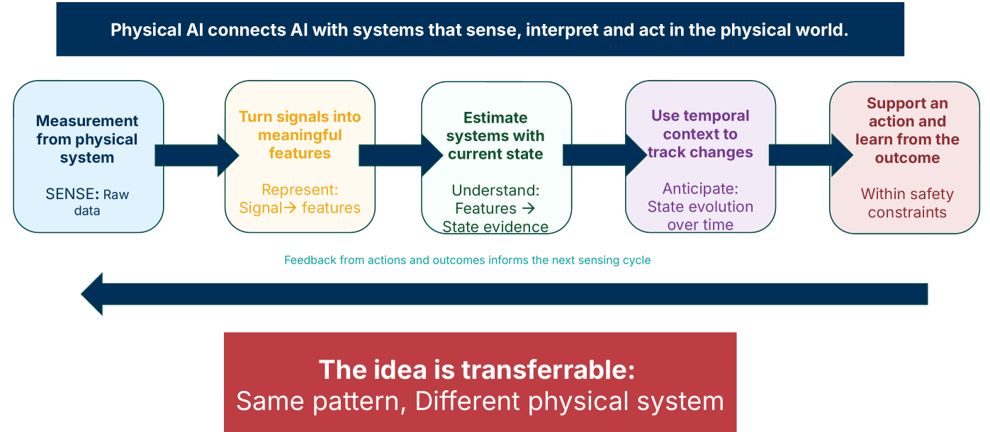
Figure 3. The same five-step approach can be applied to other physical systems.
As the project progresses towards the integration of these technologies in larger battery prototypes, this achievement brings Europe one step closer to safer, longer-lasting and more sustainable energy storage systems capable of actively managing their own health throughout their operational lifetime.

Li-S batteries offer a theoretical capacity around ten times higher than today’s Li-ion ... Read More

Purpose Cross package innovation only scales when everyone builds to ... Read More

As batteries age, their performance gradually declines. Tiny changes in capacity, voltage,... Read More



Funded by the European Union. Views and opinions expressed are however those of the author(s) only and do not necessarily reflect those of the European Union or the European Climate, Infrastructure and Environment Executive Agency (CINEA). Neither the European Union nor the granting authority can be held responsible for them.